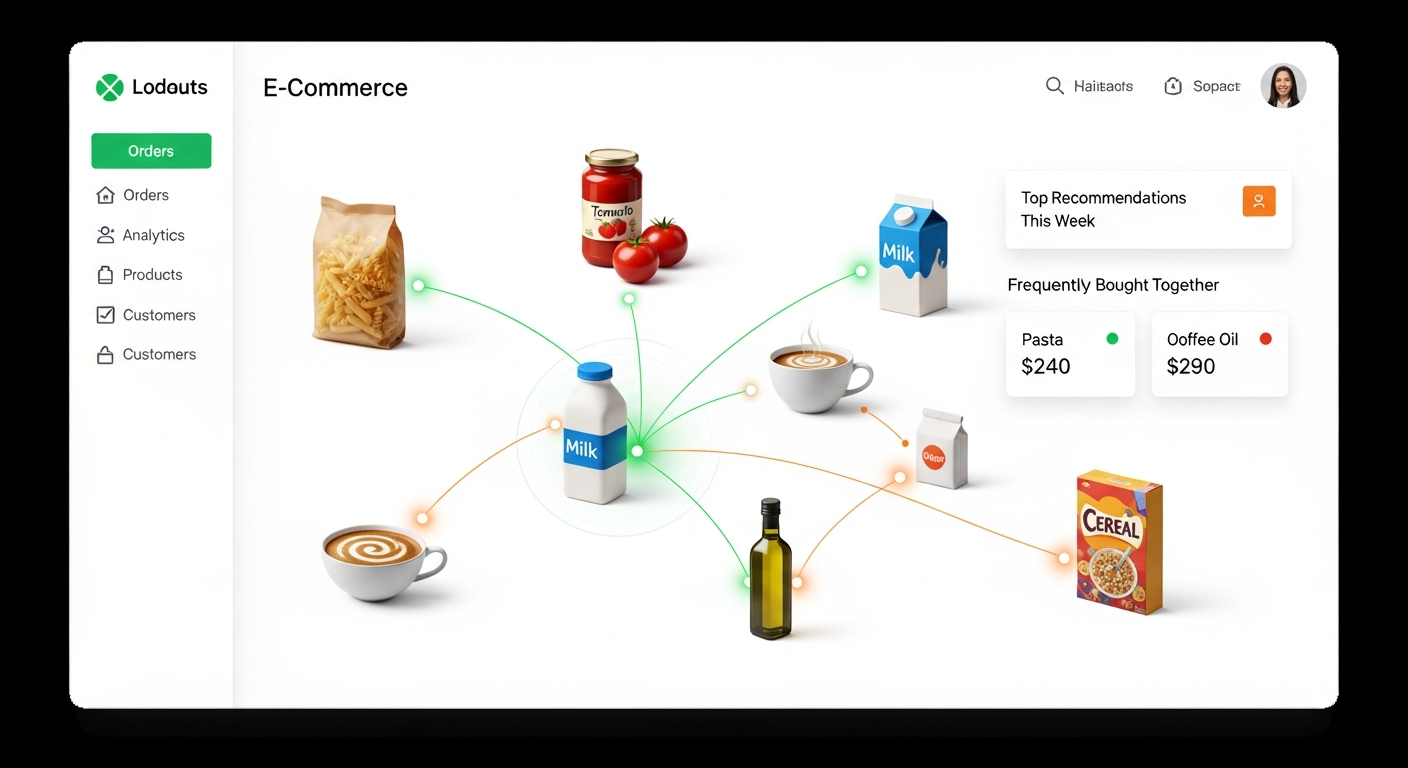
The concept of “frequently bought together” has become one of the most powerful tactics in e-commerce. Popularized by Amazon, this recommendation feature reshaped how consumers shop online — and its potential for grocery e-commerce is even greater.
In online grocery, where baskets are naturally larger and products are highly complementary, a smart “frequently bought together” strategy can increase basket value, improve customer experience, and build long-term loyalty. This article explores how grocers can use data, personalization, and technology to optimize their recommendation systems.
Frequently Bought Together
What Does “Frequently Bought Together” Mean in Grocery E-commerce?
At its core, the feature suggests products commonly purchased in the same transaction. Examples include:
- Pasta and tomato sauce
- Milk and cereal
- Coffee and filters
- Chips and dip
- Tortillas, cheese, and salsa
Online, it appears as “Customers who bought this also bought” or “You may also like.” This technique mimics natural shopping behavior, saving customers time while increasing average order value. According to a Barilliance study, personalized product recommendations can generate up to 31% of total e-commerce revenue.
Why Product Recommendations Matter for Grocery Stores
In grocery retail, product recommendations go beyond upselling — they’re part of a seamless and personalized customer experience. They help to:
- Increase basket size through logical pairings
- Improve customer satisfaction by preventing missed items
- Boost repeat purchase rates with relevant suggestions
According to McKinsey, personalized recommendations can drive 20–30% of total e-commerce revenue. In grocery, where purchases are frequent and repetitive, personalization compounds this impact over time.
The 5 Key Strategies for “Frequently Bought Together” in Grocery
1. Data-Driven Bundling Strategy
Instead of guessing, use sales data to identify the most common product pairings. AI-driven recommendation engines reveal hidden correlations that human merchandisers might miss — such as linking cooking oil and flour, often purchased together in baking categories.
2. Personalization Strategy
Generic bundles don’t resonate. A personalization-first approach tailors suggestions to the shopper’s preferences. For example, recommend gluten-free pasta and bread to celiac shoppers or family-size snack packs to households with children.
3. Seasonality and Campaign Strategy
Adapt recommendations to reflect the time of year or key events: BBQ kits in summer, Halloween treats in October, or Christmas baking bundles in December. Forbes reports that seasonal personalization significantly boosts conversion and engagement rates.
4. Cross-Channel Placement Strategy
Where recommendations appear is just as important as what they display. The best-performing retailers position “frequently bought together” modules throughout the customer journey:
- On product pages — to encourage early add-ons
- In the mini-cart — to increase attach rates before checkout
- At checkout — for last-minute upsells
- Via email or push notifications — to re-engage customers post-purchase
5. Operational Alignment Strategy
Grocery has unique operational constraints — freshness, stock levels, substitutions. To maintain accuracy, recommendations must be tied to live inventory data. For example, if strawberries are unavailable, the system should automatically suggest blueberries instead. This reduces frustration and cart abandonment.
Case Study: Grocery vs. Amazon Approach
While Amazon’s feature works for general retail — pairing laptops with cases or cameras with memory cards — grocery retail demands a different logic. Food products have expiration dates, seasonal availability, and dietary relevance. A grocery-specific recommendation model must account for freshness, substitution rules, and replenishment cycles.
According to Accenture, grocers that adopt adaptive recommendation algorithms see higher satisfaction scores and reduced cart abandonment rates compared to those using static models.
Best Practices to Enhance Your Strategy
- Personalize offers based on lifestyle and purchase history.
- Rotate bundles seasonally to stay relevant.
- Localize recommendations to reflect cultural and regional preferences.
- Integrate recommendations into all digital channels for consistent messaging.
When applied together, these practices transform “frequently bought together” from a simple upsell tool into a holistic merchandising framework.
The Technology Behind Modern Recommendation Systems
Advanced recommendation software powered by AI and machine learning analyzes customer behavior, adapts to real-time inventory, and considers contextual data such as weather or holidays. In grocery, this intelligence ensures suggestions remain accurate, fresh, and feasible to fulfill.
While general e-commerce platforms like Shopify or WooCommerce offer basic “related products” features, grocery retailers benefit from custom or vertical-specific systems capable of managing perishable items and substitutions.
Conclusion
The “frequently bought together” strategy is far more than a cross-sell widget — it’s a complete framework for grocery growth. By combining data analysis, personalization, seasonality, omnichannel integration, and operational precision, retailers can transform simple recommendations into a powerful growth engine that boosts basket size, loyalty, and efficiency.
As grocery e-commerce continues to expand, those who master the art of relevant and intelligent recommendations will lead the future of digital retail.